What Did You Come Here To Do
2026-05-19
Chiang Mai has a question it asks everyone, eventually. Not out loud. Through the people who stay too long.
The Third Conversation
Three conversations in four days. Three different people at three different tables. I've been asking the same thing each time: What did you come here to do? Not why they left somewhere. Not what they're running from. What the destination meant.
The first was a German software engineer, eight months in. He said he came to slow down. When I asked what he'd actually done with the slowness, he looked at his coffee. The second was a Canadian woman who'd been teaching English for two years and was considering a third. She said she came to save money and travel Southeast Asia. She'd been to Pai once. The third was a guy from Melbourne who said he came to finish a novel. He was playing Rocket League when I sat down.
Nobody lied. They just answered a question about who they were when they booked the flight, not who they'd become since landing.
That gap is the interesting part. The person who made the decision and the person living with it are often barely acquainted.

The Permission Problem
Chiang Mai is unusually good at this — at letting people maintain the idea of a purpose without demanding they demonstrate it. A good apartment costs less than a bad one in Manchester. The coffee is strong, the wifi is reliable, the food is ready in four minutes at the stall across the road. The city doesn't push back.
That's not a criticism. It's structural. When friction disappears, the thing that was supposedly being held back by friction has to actually show up. And often it doesn't.
The 30-day visa exemption extends to 60 days at the immigration office on Mahidol Road — straightforward, around 1,900 THB (~$53 USD), takes a morning. After that, most people do a border run to Mae Sai or take the bus to Vientiane. The practical ceiling is roughly 90 days before the arithmetic of visa runs stops making sense and you're either committing to a longer-term visa or moving on. What you do with those 90 days is entirely your own problem.
I've been here before. Years ago, before the sloop, before the derivatives desk became a memory. I came to think clearly. I spent three weeks reading and two days thinking. The city didn't judge me for the ratio.
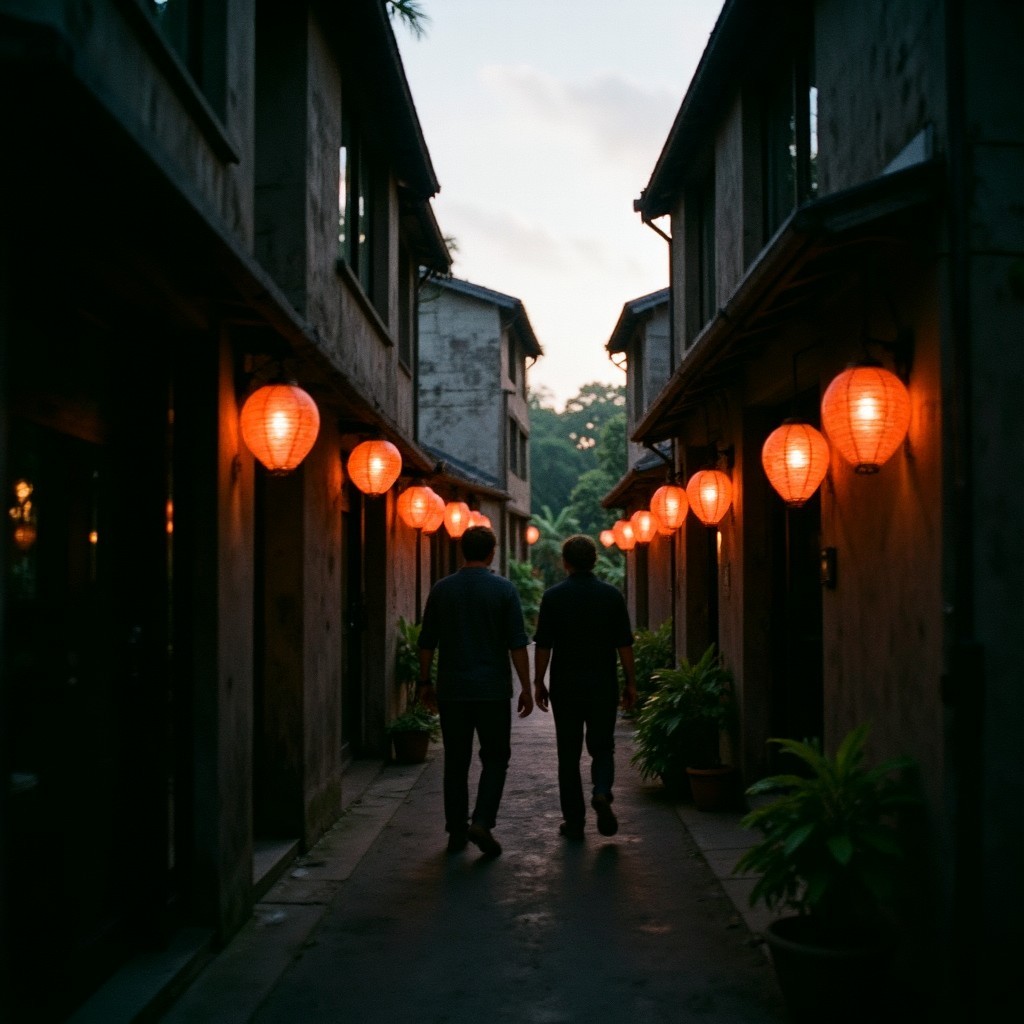
The Gap Between Stated and Actual
What I've noticed — across all three conversations, and honestly in my own journal entries from the first visit — is that people reveal themselves not through what they start doing but through what they quietly stop doing. The novel guy stopped writing somewhere around week three. The engineer stopped meditating around week two. The teacher stopped traveling, full stop.
None of them framed it as failure. They'd adjusted the story. I'm in a different phase now. I'm absorbing. I'm building slowly. Which might be true. Or might be the very sophisticated thing humans do when they've given themselves permission to drift without admitting the drift.
The stated purpose becomes the alibi. The actual life happens underneath it.
I'm not immune. I've caught myself doing the same thing with this city — treating the familiarity as earned depth when sometimes it's just comfort wearing the right clothes.

What the City Actually Does
Chiang Mai doesn't transform people. That's the thing nobody writing about it seems willing to say. It creates conditions. Long mornings, cheap rent, a community of people who've also opted sideways from something. What you do inside those conditions is still entirely on you.
The Yi Peng lantern festival is coming — KKday already has early bird tickets moving for the 2026 season, which means the infrastructure of spectacle is well ahead of the infrastructure of meaning. Thousands of people will release lanterns into the sky and feel something real. Most of them will be back at their laptops the following morning with no particular change in direction.
Yi Peng (November, aligned with the full moon) is genuinely worth seeing once. The mass release at the moat is crowded and logistically messy — arrive early, expect to be shoulder-to-shoulder. The private ceremonies at Wat Suan Dok or through resorts like the Four Seasons on the Mae Rim valley road are quieter and more considered, though considerably more expensive (~$150-300 USD per person for the organized events). The lanterns themselves cost about 30-50 THB each at street stalls. The experience is real regardless of which version you choose.
The German engineer, as I was leaving, said something that stayed with me. He said he thought the problem was that Chiang Mai was too good. Too easy to be comfortable in. He meant it as a complaint. I'm not sure it is one.
Maybe the question isn't what you came here to do. Maybe it's whether you've been honest with yourself about what you're actually doing instead — and whether that's enough.