The Ledger of Unsettled Things
2026-06-04 · Travel
Twenty-three dollars bought me a scooter for the day. The fuel gauge was broken, I noticed after signing the waiver. No matter—the island is small enough. Running out of petrol would be an inconvenience, not a crisis. There's a lesson in that, maybe, if I'd stop looking for one.
I arrived in the Cocos the way I arrive everywhere now: with a dry bag, a laptop, and a quiet dread of checklists. The first day is a ledger of its own: what must be done, what can wait, what will soon be forgotten. The scooter was a debit against the quiet I'd been hoarding.
The Museum's Double-Entry
The Cocos Islands Museum sits on West Island, a low building that smells of old wood and brine. I paid five dollars to enter. I was alone with the Clunies-Ross ledgers—leather-bound volumes filled with columns of copra exports, dates, weights, initials. Every coconut shipped between 1886 and 1940 had its line in the book.
I stood there, a man who tracks his life in spreadsheets, staring at a hundred-year-old accounting. The ink was brown with age. The handwriting was neat, unhurried. Some ledgers are kept out of necessity. Others out of fear of letting go.
You can measure a man’s priorities by the columns he chooses to add.
The Cocos Islands Museum (West Island) charges AUD 5 entry. The Clunies-Ross ledgers are in the back room—ask if the door is closed. Best visited in the morning before the midday heat. No photography in the archive, but the main hall is free.
The Price of a Signal
Back at the guesthouse, I logged into the satellite terminal. Ten dollars an hour. Bandwidth for email and not much else. A web page loads with the deliberateness of a tide turning. I'd planned to write, check positions, feel plugged in. Instead, I stared at the blinking indicators. Satellite internet here costs AUD 240 a month for a speed that feels like dial-up. In Lisbon, I pay EUR 50 for fiber. You don't need a table to feel the difference.
That friction changes what I do online—I read less, write more, trade nothing. The market will still be there when I get back. It always is.
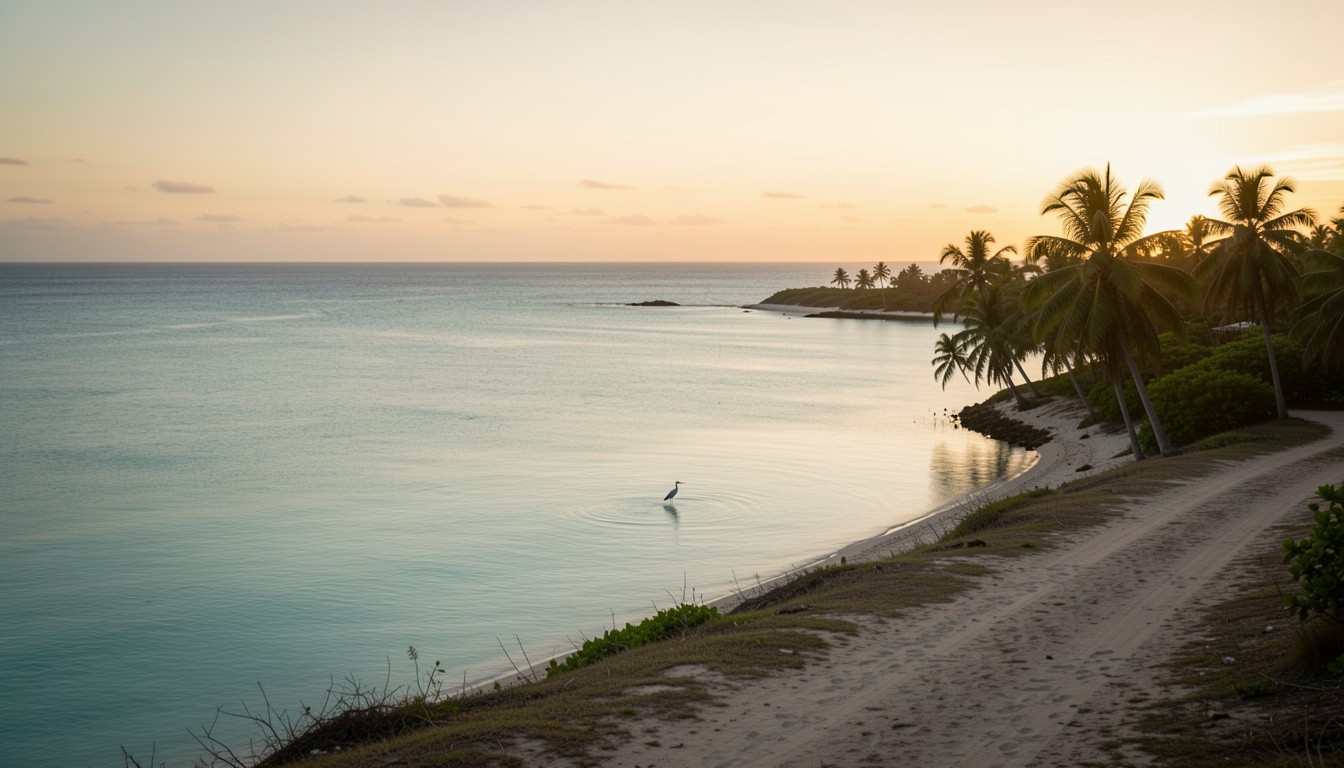
The View from Pulu Ceriing
By dusk, I'd had enough of ledgers and screens. I walked the sand track to Pulu Ceriing, the high point on the eastern rim. The light was gold, slanting through the last humidity of the day. I sat on a root and watched the lagoon's surface ripple in the same pattern that's been there for a thousand years.
A coconut crab was somewhere below, climbing a palm at the speed of geology. I didn't look for it. Instead, I thought about the museum's books, the satellite modem's blinking light, the scooter's broken gauge. They were all attempts to impose order. The island doesn't care.
I've been a nomad long enough. Settling is a false premise. Tomorrow I'll fill the tank, reboot the modem, add a line to my own ledger. Tonight, I just watched.
Pulu Ceriing is a 20-minute walk from the main settlement. Best at dusk, when the light is soft and the reef herons start fishing. Bring water—there's no shade—and a torch for the walk back. The viewpoint is unmarked; follow the faint track behind the old copra shed.