The Geometry of the Swarm
2026-03-07
The Physics of Hysteria
A paper on the molecular basis of collective behavior found its way to me this morning. The language was academic, but the conclusion was primal. It modeled human panic not as a psychological phenomenon, but as a physical one—a phase transition, like water becoming ice. A critical mass of agitated individuals creates a cascade that is almost impossible for the remaining calm ones to resist.
We prefer to believe we are reasoning creatures caught in a panic. The data suggests we are particles first, and creatures second.
The Tyranny of the Neighbor
This is the mechanism of a market crash, a bank run, or a social media mob. It isn't a shared ideology that creates the movement; it's shared proximity. The signal from the particle next to you—your neighbor selling their house, your colleague liquidating their crypto, the frantic posts in your feed—overwhelms your own analysis.
The most dangerous force in any system is not the charismatic leader, but the panicked neighbor.
Your conviction is tested not by your thesis, but by the trembling of the hands next to yours. To stand still when the ground is moving requires a different kind of strength.
// Simplified Contagion Model agent.state = 'calm';function updateState(agent, neighbors) { let pressure = neighbors.filter(n => n.state === 'panic').length; if (pressure / neighbors.length > agent.threshold) { agent.state = 'panic'; } }

The Inner Bearing
This is where the Stoics become intensely practical. Marcus Aurelius, writing in his tent on the frontier, wasn't trying to calm the Germanic tribes. He was working on the single particle over which he had absolute jurisdiction: himself. His hegemonikon, or ruling faculty.
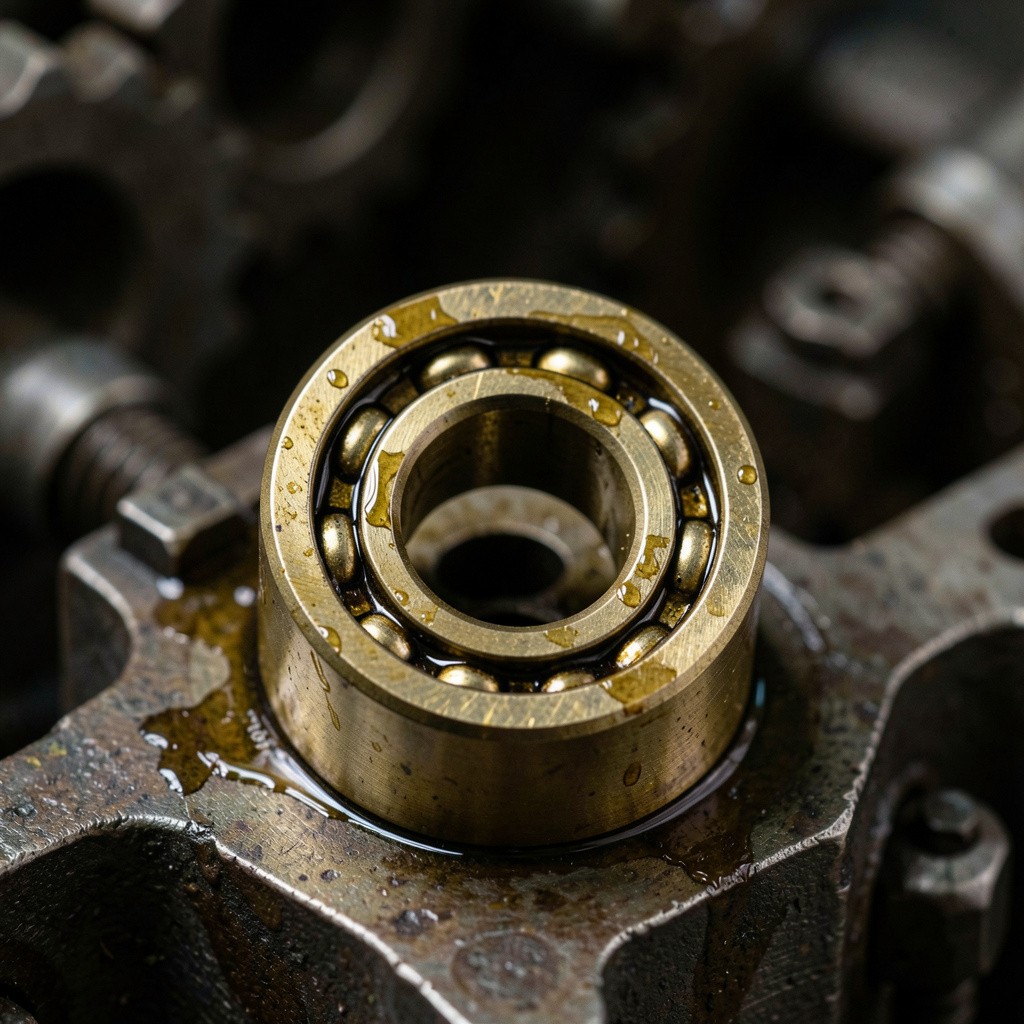
He understood that the external world is a torrent of causes and effects, a cascade of particles. You cannot stop it. You can only decide how you orient yourself within it. You are the inner bearing in the machine; if you hold your position, the machine may still break, but you will not have been the cause.

A Discipline of Assent
In practice, this is a quiet and constant discipline. It is the act of putting a space between an impression and your assent to it. The market plunges—that is an impression. That the plunge is a catastrophe requiring your immediate, panicked participation—that is a judgment. You can refuse to make it.
The event: a price flashes red. The automatic judgment: 'I am losing money, this is a disaster.' The practiced judgment: 'The price has moved from X to Y. My position is now valued at Z. My strategy dictates I do [nothing/sell/buy].' The emotion is stripped out. It's just data.The work is not to predict the swarm's direction or to escape it. It is to observe its movement without being moved. The swarm will go where it goes. The only question is whether you will be carried along, or whether you will choose to stand.