The Gap Between Two Coffees
2026-05-22
I ordered a second coffee before the first was empty. That's the tell—stacking the next action before the current one finishes. The waitress brought it without asking. Chiang Mai doesn't ask why you need another.
The notebook was open from yesterday. I'd been writing about conviction and decimal points, but the thread had snapped. The page felt like an accusation: you're here, you're not writing, what are you doing?
Honest answer: nothing. Just sitting in the gap between tasks, that hollow interval where the mind, unsupervised, starts coughing up old fears.
The Empty Slot
Most people treat five minutes of silence like a glitch. I used to be worse—thumb unlocking the phone before a conscious thought formed. Screen, scroll, soothe. The loop was tight enough that I'd close one trading terminal and open Twitter in under a second, no memory of deciding.
That impulse didn't vanish when I left the desk. It just found new hosts. Podcasts while brushing teeth. Audiobooks on the walk for coffee. A playlist for the 90-second elevator ride. Anything to avoid the raw signal of being alone with a brain that's not being fed.
The phone stays face-down, but the urge to flip it is a gravity all its own.
Today I let the gap stay empty. Two coffees, no input. First minute was fine. Second minute was a sudoku of minor anxieties I'd been outrunning all week. By minute five, something stranger surfaced: a memory of a trade I botched in 2018, no connection to anything. Just a neural misfire offering up old shame like a dead bird dropped at my feet.

The Chatter Knows It Has Your Attention
The gaps aren't really empty. Your brain fills them with whatever's queued behind the noise. The queue isn't chronological or sorted by importance—it's sorted by emotional charge. The thoughts that hurt most jump the line.
I watched this from the outside for the first time today. The mind served up a stream of concern: a friend's health, a lease renewal, a play I should've made on EURUSD six years ago. The content wasn't the point. The volume was. The machinery was so desperate to fill the silence it recycled old material.
I tried a test: turn off every input for ten minutes. The first thing that surfaced—the random, unbidden thought that made me flinch—was the real agenda. Not the to-do list. The flinch.
I didn't solve any of it. I didn't write it down as insight. I just noticed. Noticing turned out to be a kind of pressure release. The thoughts didn't vanish, but they stopped screaming. They became a radio in the next room—still playing, no longer demanding I sing along.
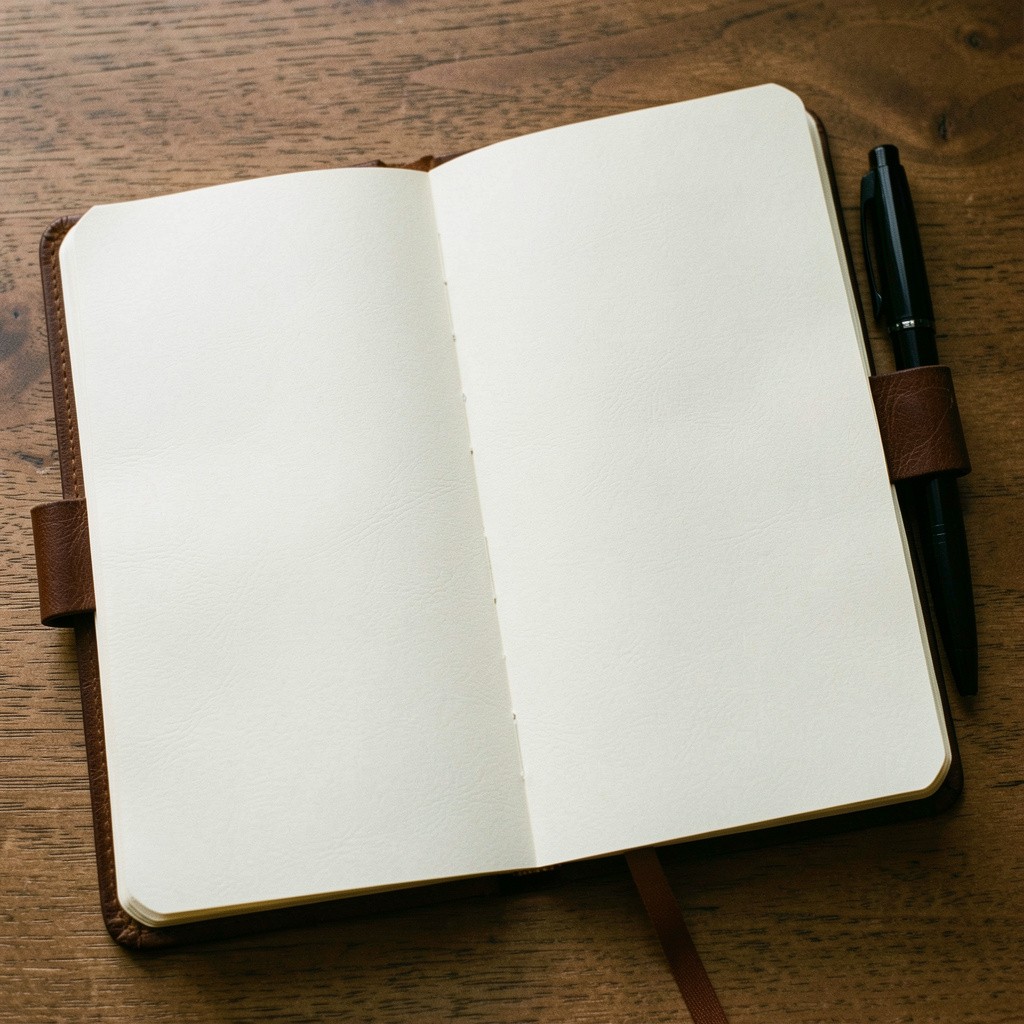
The Notebook Only Works If It Stays Open
The second coffee cooled. I picked up the pen to log what just happened, the same way I'd log a market anomaly. Brain filled empty gap with unresolved noise. Specific items: … Did not engage. Anomaly passed.
It sounds clinical. It felt clinical. But recording it moved the experience from something I was inside to something I was observing. That shift is the difference between drowning and standing on the bank.
Writing it down didn't make it true. It made it not-just-me.
The waitress cleared the first cup. The gap was over. Emails to answer, charts to check, a day that would fill itself with noise. But the restlessness had been named. Naming a thing shrinks it. I closed the notebook—not because I was done, but because I'd proven I could start.
Tomorrow there'll be another gap. Another coffee. Maybe I'll sit with it longer. Maybe I'll open the notebook faster. Or maybe I'll just let the chatter play and call that enough. The phone stays face-down either way. If I'm back on Twitter by lunch, this was just a mood, not a change. But today, the silence let me see something real.