The Farmer's Name
2026-06-14 · Travel
The fork in the path wasn't marked. I went left because the mud looked shallower.
It wasn't.
The Fork Unmarked
Sayan Ridge offers a few kilometers of packed earth between the river gorge and a set of rice terraces that no one photographs. That's why I come here. The terraces themselves are modest — twenty plots, maybe, descending in wide, green steps toward a stand of bamboo — but the light across them at three in the afternoon is the kind that makes you understand why people paint.
The mud that swallows your sandal isn't part of the brochure. No one told me the path would be soft after last night's rain, or that the left fork leads to a drainage culvert the farmer widens every season with a hoe. I stood ankle-deep, considering whether to turn back. The sun was still high. I had nowhere to be.
After monsoon, the lower path through the terraces becomes a slip of clay. Local farmers use it anyway, barefoot or in rubber boots. A guest should wear sandals they don't mind rinsing in the irrigation channel.
The Farmer's Name
He came up the terrace wall from the lower field, a hoe balanced across his shoulder. The blade was wet. He was maybe sixty, with a sarong tied high, and he stopped when he saw me standing in his culvert.
'You are lost,' he said. Not a question.
I told him I'd missed the fork. He nodded slowly, as if this happened every week. Then he pointed back the way I'd come — not with the hoe, but with his chin, the way people do here when their hands are full — and said, 'You pass the mango tree. Then you see the stone.'
I asked his name. Ketut. He asked if I wanted water. I said no, and he walked on toward the lower field, stepping over the mud without looking down.
I learned nothing from him except his name and the way he moved through ground I couldn't stand in. That was enough.
Back to the River
The tender ride back to Serenity took twelve minutes. The river was low enough that we had to cut the engine twice to drift over a sandbar. The light had shifted to that brief, honeyed hour before dusk — the deck crew call it gold watch — and I watched the water darken under the hull.
Chef Marcello had set a table on the main deck. Seven courses, most of them green, and a 2013 Savagnin from the Jura that had probably been worth storing a decade but was better now. The river sounded like rain but wasn't. I didn't mention the mud on my sandals. I ate the first course — a chilled cucumber thing with shiso — and felt the day settle into something like a fact.
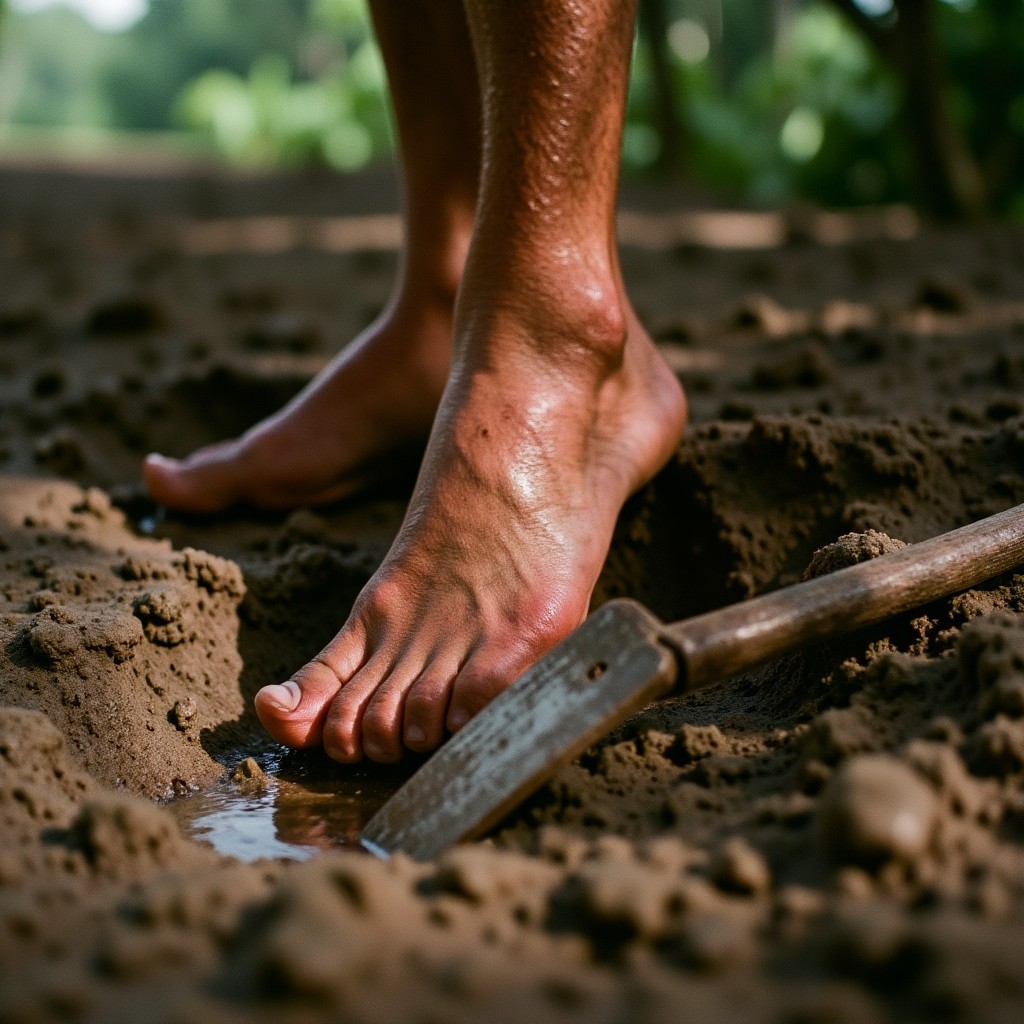
The farmer's name will not change my life. I will not think of him when I trade, or read, or make decisions. But I will remember the way he didn't tell me to be careful, didn't ask where I was from, didn't offer a blessing. He just pointed to the stone and kept walking. Some afternoons, that's the only wisdom you get.