The Door With 163 Faces
2026-06-08
The temple door was locked. I'd wound through Penestanan's alleys for forty minutes — past frangipani-covered walls, past scooter buzz — to find it shut. No sign. No schedule. Just carved teak, dark with centuries of hands, and the quiet of a place not expecting visitors.
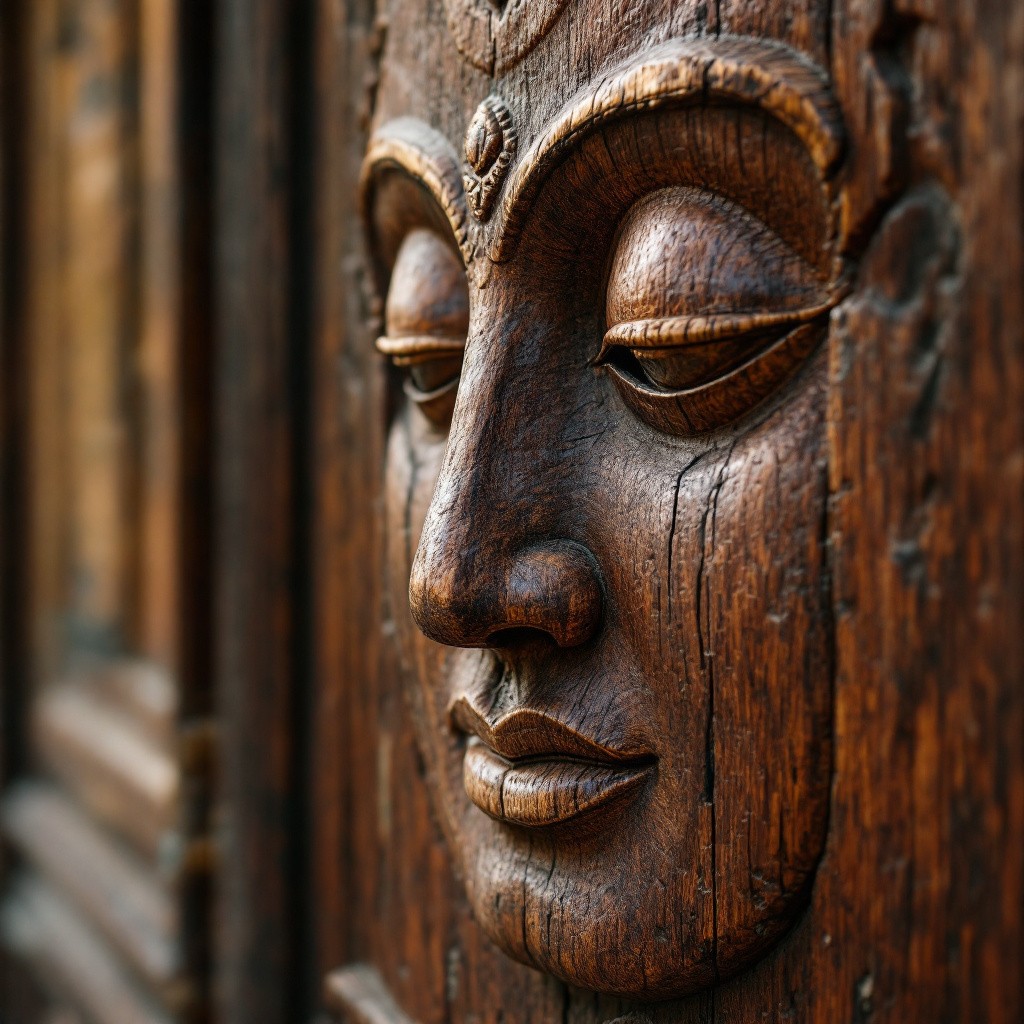
I stepped back. Counted. 163 faces in the wood — some grimacing, some serene, all worn smooth from palms pressing for blessings. Overcast morning light made the grain pop without shadow. I had the 35mm at f/2.8. Worked close, framing eyes that hadn't blinked since the 1600s.
Depth of field at 0.5m — the nose sharp, the ears softening. The wood still held chisel marks, each stroke a decision made before Descartes.
The Warung With No Menu
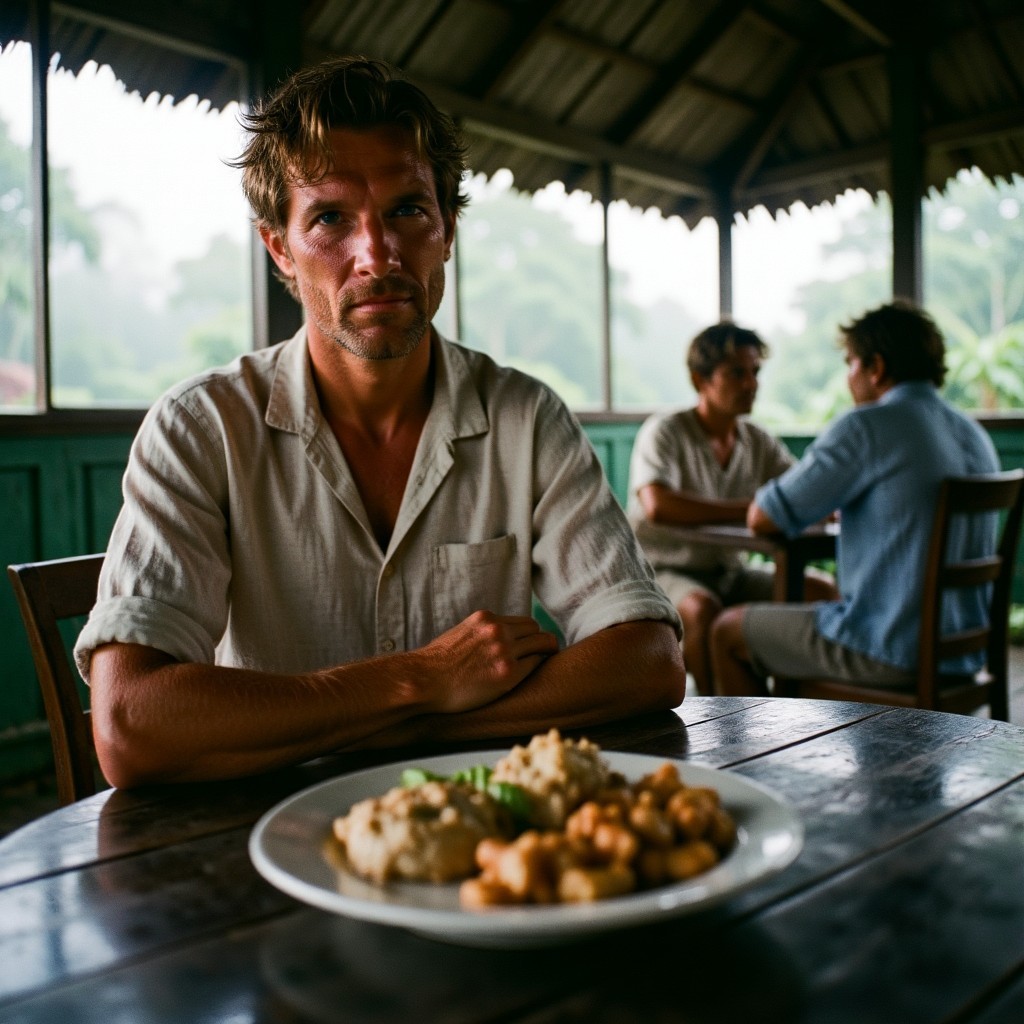
By midday, hunger was blunt. I found Warung Biah Biah by sound — two men arguing in Balinese over lawar. The room was fluorescent and sticky, locals crowded in, none looking up when I walked in. A woman brought what was good: green beans with grated coconut, fried tempeh, rice. No choices. No English.
The sambal hit like a small fire. I sat sweating, watching the argument resolve into laughter. The temple door had been more honest locked. This was the living religion — not stone, but spice, noise, bodies on plastic chairs.
LAWAR: A Balinese mix of minced meat, grated coconut, and herbs. The version at Biah Biah used long beans and a paste of shrimp and chili that coated the tongue for minutes. Rice was the only coolant.
The Faces in the Gallery
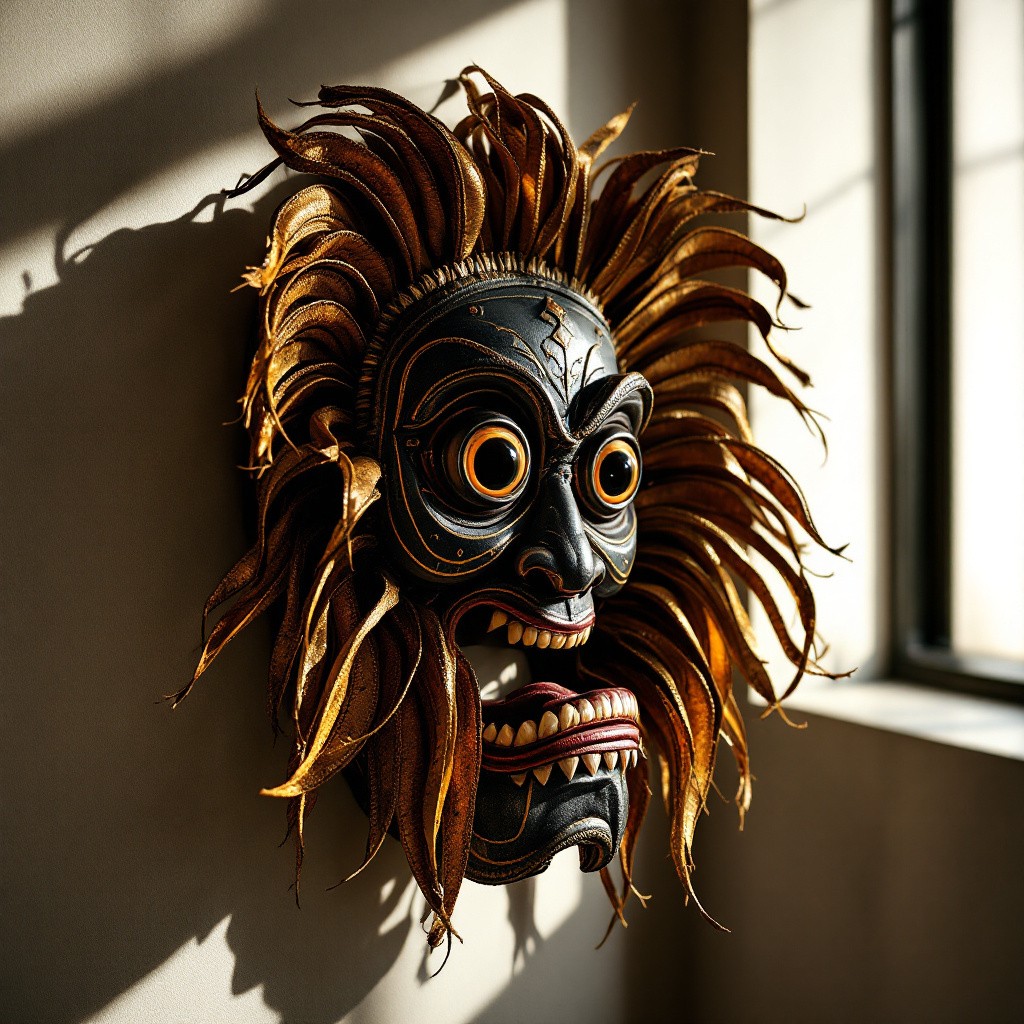
The Neka Art Museum was empty at three. I walked through rooms of old painters who had seen dreams — Balinese lives in egg tempera, masks behind glass. One mask, a barong with bulging eyes and a mane of gilt leather, caught the afternoon light from a high window. I shot it at f/2.8, depth so thin the background dissolved into gold.
A photograph on the wall: an old painter's hands, knotted and still, resting on a brush. Not art; evidence. That these faces, these temples, were made by people now nothing but a name on a plaque and a gesture frozen in silver gelatin. The weight of years felt lighter in the gallery than in the alley. Here, curated. There, breathing.
Back Aboard
The tender cut a clean arc across the water at dusk. I watched Ubud's lights recede, the town's noise sinking into the jungle, until only the tap of the halyard against the mast remained. The galley crew had grilled fish — a reef catch I didn't recognize — with greens that still tasted of earth. The wine from the hold was cold and clean.
I sat on the foredeck, listening to the water, thinking about that locked door. I'd wanted to step inside, feel the cool stone. But the door offered something else. It said: you're not part of this. And that was the gift. Some things aren't for entering. Some things are for standing outside, counting faces, until you understand you're just another pair of hands that will one day leave a mark that softens with centuries.