The Architecture of Deliberate Silence
2026-02-15
I own fewer than two hundred things. Each one must justify its weight and volume against the friction of moving it across continents. For five years, the most indispensable item on that list has been a pair of noise-canceling headphones. Not for music, but for the profound competitive advantage of silence on demand.
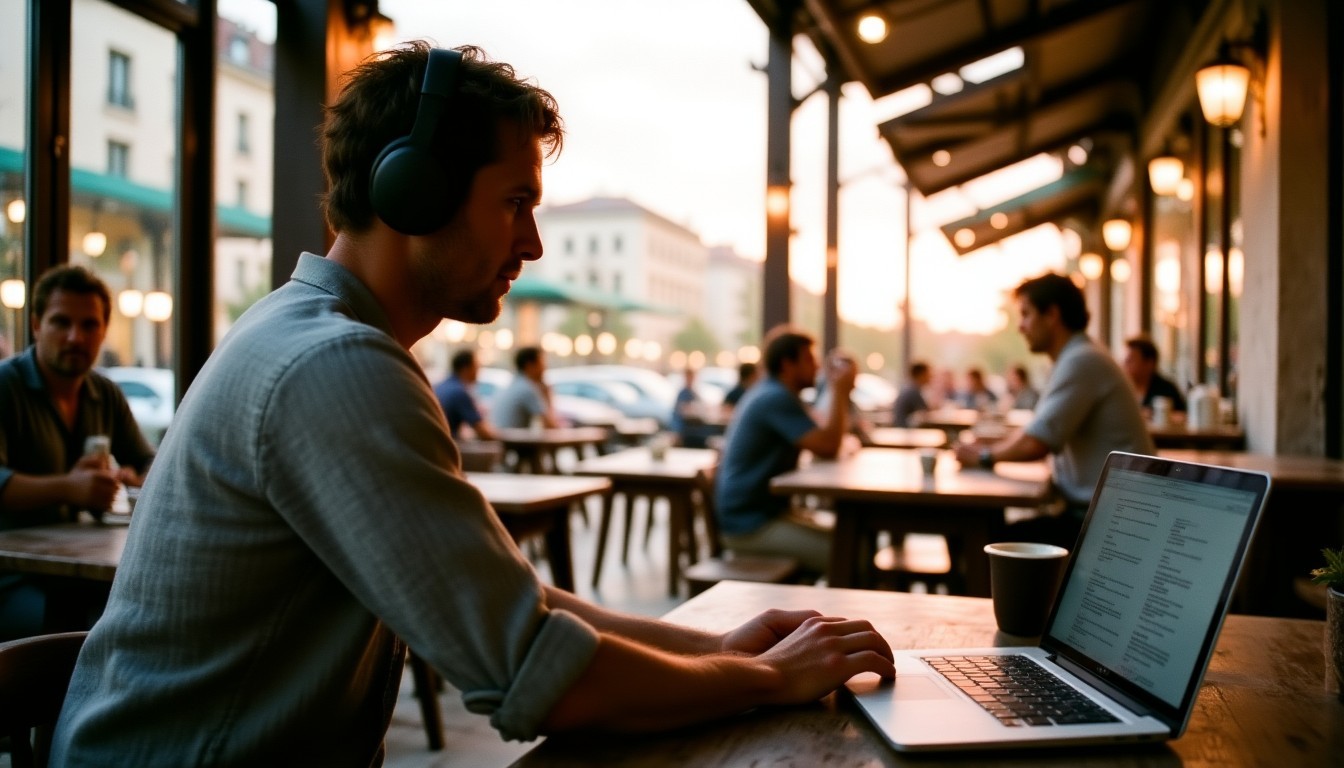
My current pair, the Bose QC Ultra, is less a gadget and more a piece of portable architecture. In a noisy café in Obidos, it’s a private office. On a turbulent flight, it’s a library. It doesn’t just block sound; it edits reality, removing the cognitive drag of ambient noise. This isn't about comfort. It's about preserving the finite resource of focused attention.
The Cost of the Bubble
Of course, there is a cost. You trade ambient awareness for internal clarity. You can become sealed off, a passive observer in your own soundproofed bubble. The technology is so effective it can feel like a form of disengagement, a clean severance from the texture of a place. The low, electronic hum of the noise cancellation itself is a replacement signal, not true silence.
We spend fortunes on optimizing our physical space, yet treat our cognitive environment as if it were public property.
But it’s a trade I willingly make. The ability to drop into two hours of deep, uninterrupted work, regardless of my physical surroundings, is the foundational asset upon which this entire lifestyle is built. It’s risk management for the mind.
I take them off, and the clatter of the café rushes back in. Not as an intrusion, but as a deliberate choice. The silence was never the destination; it was just the vessel to get the thinking done.