Precision's Quiet Economy
2026-05-24 · Culture
The silversmith's curved pliers held a half-finished silver ring, the metal still cold from the last anneal. She wasn't hesitating. She was calculating the exact pressure needed to close the seam without collapsing the oval. I'd seen that face before—the trader's pre-execution stillness, the body on hold while the mind measures risk.
Her thumb moved a millimeter. The jaws closed. The ring held its shape. She exhaled, and the workshop resumed its quiet hum.
The Pause Before the Cut
Baan Kang Wat opens at 10:00, but the real rhythm starts earlier. At 08:30, Ristr8to pours flat whites with the kind of precision that makes latte art feel like a side effect. The owner treats extraction like a chemistry exam. He roasts on a 1990s Probat that's outlasted three relationships. I faced the window. Morning light turned the copper portafilter into something stolen from a jeweler's bench.
Arrive before 10:00. The studios open softly—a belt sander goes before anyone appears. Coffee at Ristr8to is worth 70 THB, but skip the pastry. Save room for sai oua from the vendor at the entrance—grilled over coals, stuffed with lemongrass.
The silversmith's paused with me. In markets, we call it patience—the ability to wait for a setup so clean that the trade executes itself. But here, it wasn't patience. It was respect for the material. Silver has a memory. Force it, and the ring cracks along the seam a month later. The customer never knows why.
> "The difference between craft and production is the willingness to pause at the moment of no return."
Where the Clay Decides
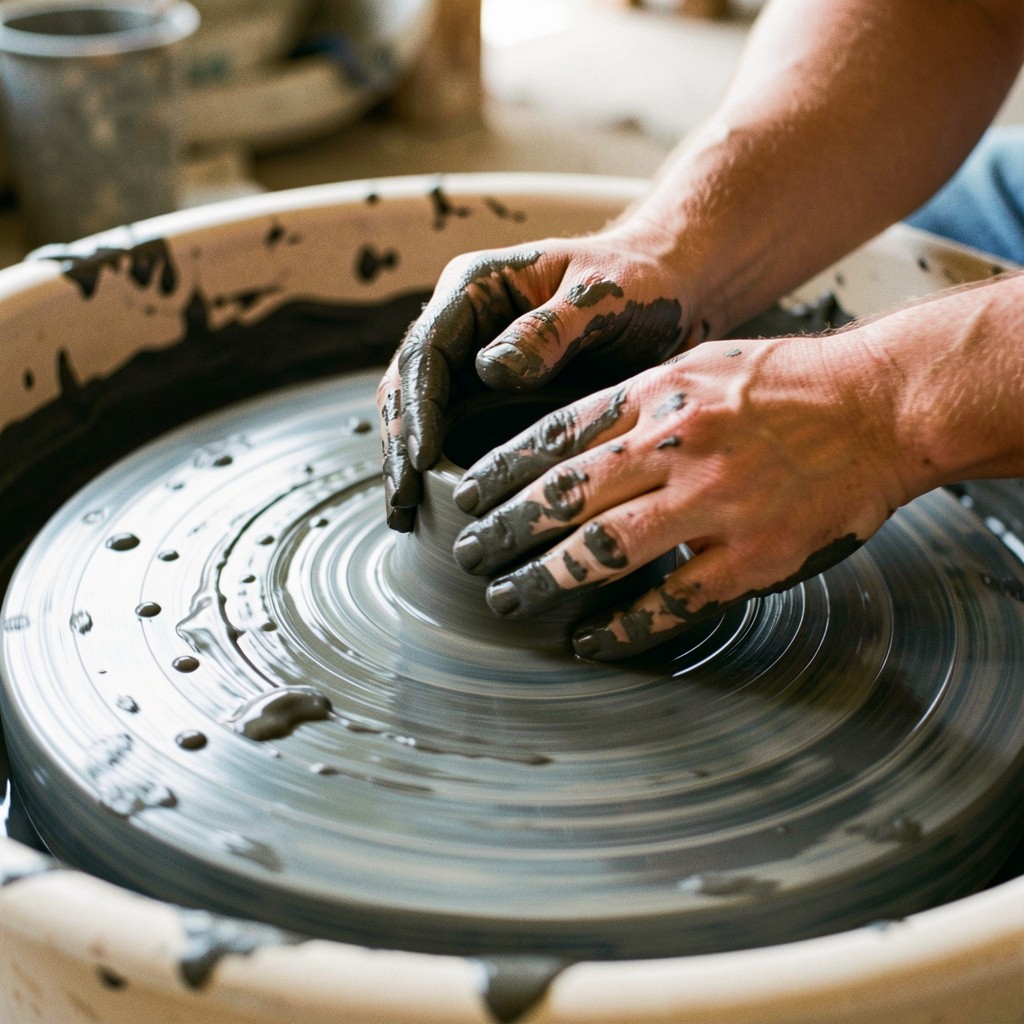
Next door, a potter centered a mound of dark clay on a wheel spinning at 120 RPM. Her hands cupped the form without grasping—guiding, not controlling. The clay wobbled, settled, then rose. A cylinder as thin at the rim as a credit.
I asked through a translator how she knows when it's done. She pointed to the base. "When it stops fighting me, I stop."
In trading, we talk about letting the trade come to you. But we rarely hold that posture for more than a few minutes. The potter held it for an hour. Her breath synced to the wheel's hum. Her body swayed like a metronome set to largo.
Baan Kang Wat is an artist village, not a shopping mall. Buy if something moves you, but the real transaction is watching. Most artists will talk if you ask about materials—skip the inspiration requests. Bring cash. Many studios don't take cards, and the nearest ATM is a 15-minute walk.
The printmaker was pulling a linocut when I passed. The press groaned. The paper lifted to reveal a black line as sharp as a hacker's traceroute. She inspected it, nodded, and hung it to dry without a word. Approval here is silent. You know when it's right because you don't hear about it.

The Tunnels That Swallow Sound
Ten minutes up the road, Wat Umong burrows into a hillside. Low-ceilinged tunnels, dark, lined with bricks that sweat in the humidity. I stepped inside. The scooter traffic vanished—not faded, cut off like a circuit breaker tripping.
The only sound was water dripping from a crack onto a stone Buddha's knee. I sat on a bench and let my eyes adjust. The D850 hung around my neck, useless without light. For once, I didn't mind.
Wat Umong is open sunrise to 18:00. Tunnels are free, donations requested. Go between 11:00 and 13:00 when tour buses are elsewhere. Wear long pants—it's a working temple. The moss-covered Buddha heads are the obvious frame, but the truly quiet shots are in side crevices where cobwebs catch the light like old parachutes.
I thought about the silversmith's pause again. In the silence, I could still feel the ring's weight in my palm. She'd held it up at the end, the seam invisible, and handed it to me without a word. I didn't buy it. I just wanted to hold something that someone had paused for.
The Dish That Defies Translation
By 18:00, Huen Phen was filling up. The front room is a tourist conveyor—vinyl menus, photos of every dish. I pushed through to the back. Teak cabinets hold Chiang Mai pottery. Black-and-white prints of the family line the walls—they've run this kitchen since 1957.
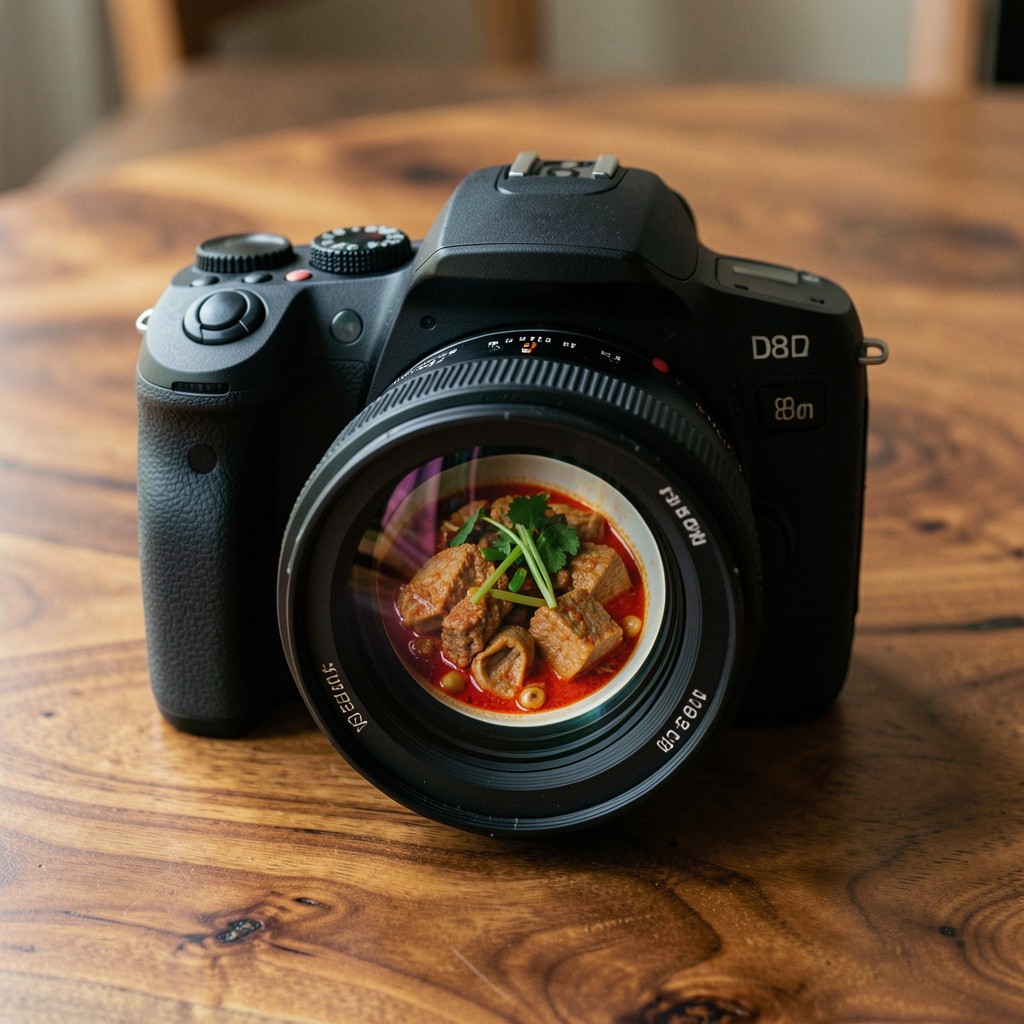
The northern Thai set arrived on a lacquer tray: gaeng hang lay, a pork curry thick with ginger and tamarind, its edges candied from long simmering; nam prik ong, a tomato-chili dip that tastes like something a grandmother would make if she'd grown up on a volcano; sticky rice, steamed in bamboo, handled with fingers that learned to eat this way at six months.
The kitchen shouted in northern dialect. A cook laughed. The curry arrived a beat later, the oil separating at the edges—it had been cooking since noon.
I ate slowly, the way the silversmith would approve. Not savoring in the food-writer way. Paying attention.
Tomorrow, I fly to Lisbon. The D850 is packed, its sensor cleaned of Chiang Mai dust. I'll carry the memory of that pause across the ocean, knowing that precision is not about speed. It's about the willingness to stop the wheel, lift the ring, and decide if it's time to apply pressure—or wait.